
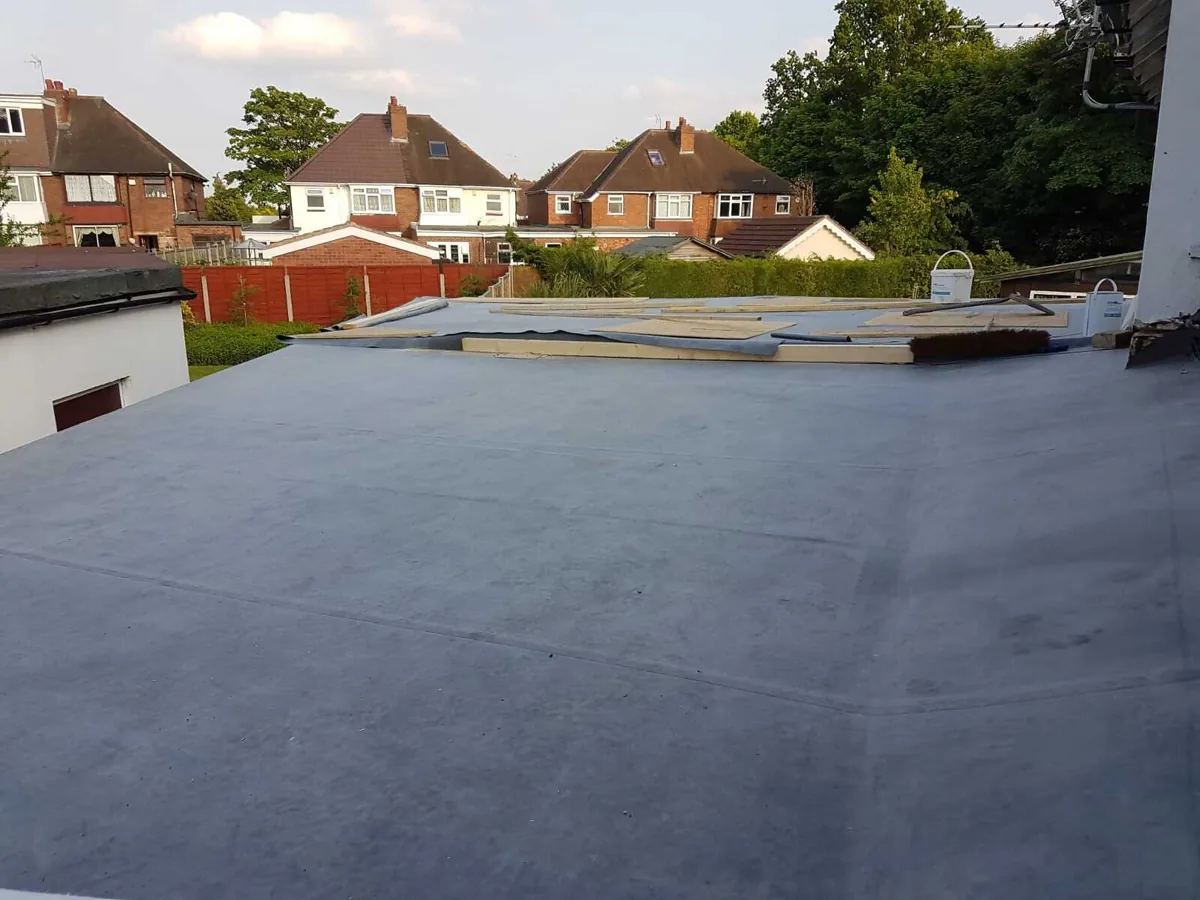
What is EPDM?
EPDM stands for ethylene propylene diene monomer. It is a synthetic rubber membrane used to waterproof flat and low-slope roofs. It is typically supplied in large sheets, which can mean relatively few joins on a suitable roof shape.
Property owners often consider EPDM for garages, extensions, outbuildings and commercial flat roofs because it offers a clean finish and is designed to remain flexible through changing weather.
Where can EPDM be used?
EPDM can be a good fit for many flat and low-slope roof structures, but the material alone does not decide suitability. The roof deck, falls, outlets, edges, adjoining walls and any skylights all influence the installation.
A small, simple rectangular garage roof presents different detailing from an extension with several corners and a roof lantern. The right starting point is an assessment of the actual roof rather than a price based only on square metres.
Benefits—and the bits people leave out
EPDM is valued for flexibility, weather resistance and comparatively low routine upkeep. Large sheets can create a neat surface with fewer joins. It can also work neatly around roof windows when those details are planned properly.
However, no membrane is a shortcut around sound preparation. Damaged decking, poorly considered drainage or rushed edge details can undermine the result. “Low maintenance” also does not mean “never look at it again”. Periodic checks remain sensible.
Why installation details matter
Ask how the existing roof will be prepared and what will happen at the perimeter, outlets, walls and openings. These are the places where a roofing system has to change direction or meet another material, so they deserve as much attention as the main field of membrane.
- What condition is the deck in?
- How will rainwater reach the outlets?
- How will the edges be finished and protected?
- How will skylights or lanterns be integrated?
- What guarantee applies to the selected system?
Simple ongoing care
From a safe position, look for changes around the roof edge, blocked outlets and anything resting on the membrane that could cause damage. Keep gutters and outlets clear where safe access is already in place. If you notice a new issue, arrange an inspection rather than experimenting with sealants that may not suit the system.
Reviewed for J5 Roofing · 23 October 2026