
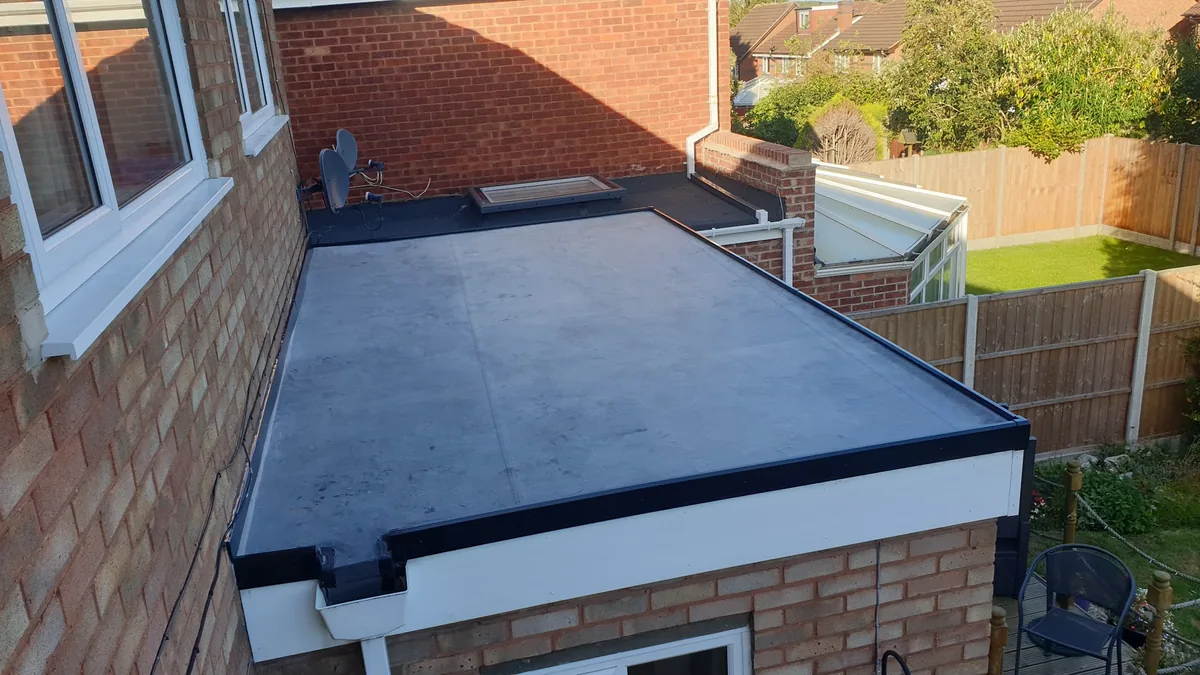
Start with evidence, not the size of the stain
A ceiling mark can look dramatic even when the roof fault is localised. It can also be a late sign of a wider problem. Water can travel along timbers and other surfaces before becoming visible indoors, so the position of the stain is only one clue.
Make a note of when the leak appears, how long it has been happening and whether it is linked to wind-driven rain. Photograph anything visible inside and outside from a safe position. This gives your roofer a better starting point than “there is a damp patch”.
When a repair may make sense
A focused repair is often worth considering when damage is confined to a small area and the surrounding covering remains in sound condition. Examples can include a particular piece of flashing, a localised open joint or a limited area of accidental damage.
The important question is whether the repair will deal with the cause. A patch applied in the wrong place may hide the symptom briefly while water continues to enter elsewhere. Ask what has failed, how the repair addresses it and what condition the rest of the roof is in.
When replacement deserves serious consideration
Replacement becomes a stronger option when faults are widespread, leaks keep returning or the covering is extensively cracked, lifted or worn. The condition of the deck and details around the roof also matter. If several parts are reaching the end of their useful life together, repeated small repairs may not offer good long-term value.
- You are dealing with repeated leaks in different areas.
- Previous patches have not resolved the problem.
- The covering shows broad rather than isolated deterioration.
- You want to upgrade the roof as part of an extension or wider renovation.
None of these signs alone decides the job. They are reasons to have the whole roof assessed rather than automatically authorising another patch.
Five questions to ask your roofer
- Where is water getting in? Ask how the likely entry point was identified.
- What condition is the rest of the roof in? A repair should be considered in context.
- What are the reasonable options? Understand the difference between repairing and replacing.
- What exactly is included? Clarify the covering, edges, outlets, flashing and making-good.
- What guarantee applies? Ask for the relevant terms before you proceed.
The J5 approach
J5 Roofing inspects the roof, explains the findings in plain English and discusses the sensible next step for the property. Before-and-after photographs can make the problem and completed work easier to understand. That gives you evidence on which to base a decision, whether the answer is a focused repair or a more complete flat-roof upgrade.
Reviewed for J5 Roofing · 23 October 2026